Wednesday, April 15, 2015

The Joke’s on You, Bill O’Reilly


Amidst the fallout surrounding Indiana’s religious freedom law, Fox News host Bill O’Reilly claims the media’s response to the law has allowed “open season on Christians.” On the segment of the O’Reilly Factor, the host singles out Bill Maher, comedian, host of Real Time with Bill Maher, and producer of Religulous, as having been given a “free pass” from the media “to attack people of faith.” What is most significant from this segment is not that O’Reilly in near obligatory fashion characterizes Maher as a primary threat to American Christianity, but that he admits that voices like Maher are winning on this divisive political issue. O’Reilly admits this openly, but what he does not admit is that, as recent trends suggest, the end is imminent for conservative analytical pretense.
Yes, the end is drawing nigh for cable news programs like the O’Reilly Factor, because for younger Americans political satire is in, and cable news sources are out. In one way, the shift can be attributed to the fact that young Americans, particularly Millennials, prefer getting their information from a variety of sources—absent traditional television news. The American Press Institute says “news and information are woven into an often continuous but mindful way that Millennials connect to the world generally, which mixes news with social connection, problem solving, social action, and entertainment.” 

Political satirists have proven to be incredibly persuasive for Millennials as they evaluate and reevaluate their opinions of the political and legal framework in the United States. Jon Stewart led the charge for years as not “a journalist, but rather "more of an ombudsman" who judges the media's coverage of the pressing issues of the day.” His show was, by all means, developed through comedy, but what made him stand out from regular news commentators and attractive to Millennials was his form of delivery—analysis through humor. Stewart will be greatly missed by Millennials, but his departure is a void that is already being filled by new and soon-to-be late night comedy hosts such as Stephen Colbert and Jimmy Fallon.

Maher fits into the Millennial dialogue similarly to Stewart, and arguably more directly, which is why O’Reilly has good reason to be worried. Maher was chosen by recent graduates at Berkeley as their commencement speaker, where he encouraged the students to “ask what is true” and to be proud of their liberal values by “own[ing] the First Amendment like Republicans own the Second.”

What can be learned from these media preferences is that Millennials, the generation that is transitioning into leadership roles for the first time, seem to be reviving an aspect of American history where progressive political satirists were at the centerfold of political debate, such as Mark Twain and Will Rogers.

Year after year, it is becoming clearer that the joke is really on you, Bill O’Reilly.  Young Americans are growing tired of unjustified, narrow-minded, and spoon-fed political commentary. When it comes to the most important political and legal issues of the day, it might sound crazy, but we may just be looking to the comedians for true guidance.

Riley Coltrin (Staff Editor, Denver SELJ)

Tuesday, April 14, 2015

Bets Are On

What happens in Las Vegas may soon be happening around the country. I am talking, of course, about sports gambling. Under the current legal scheme, betting on professional sports is illegal in most of the United States, outside of Nevada. After a public endorsement of these practices by NBA Commissioner Adam Silver last year, and recent statements by MLB Commissioner Rob Manfred, the strict laws forbidding this amateur sport may soon change.

Sports betting is generally prohibited by the Professional and Amateur Sports Protection Act, or PASPA. Although the NBA supported the passage of PASPA in 1992, thus opposing the expansion of legal sports betting throughout the country, there is no denying that sports betting is alive and well. This underground business thrives due to the lack of legal and plausible options available to enforce regulations against illicit and shady online operations.

The socio-political attitude towards gambling has changed in the two decades since PASPA’s passage.  Gambling has become a popular form of entertainment, with most states not only offering lotteries but also housing legal casinos. Perhaps it is due to this change in attitude that drove NBA Commissioner Adam Silver to publicly endorse the legalization of sports gambling this past November. Silver notes that these activities are happening anyway, despite their illegality, and the law ought to change. “One of my concerns is that I will be portrayed as pro sports betting,” he explained during an interview. “But I view myself more as pro transparency. And someone who’s a realist in the business. The best way for the league to monitor our integrity is for that betting action to move toward legal betting organizations, where it can be tracked. That’s the pragmatic approach.”


The MLB recently supported Silver’s approach. Commissioner Manfred recognized the inevitability of legalized sports betting, and stated he supported the idea of a government body in charge of this activity. Although it is true that gambling has historically been a sore spot for the sport of professional baseball, perhaps the time has come to change the legal approach to this issue. This is not to suggest that legalizing sports gambling will prevent people from continuing to use illegal avenues to place their bets (even a realist such as Silver cannot deny that people will continue to engage in shady conduct) but maybe bringing this dark little secret to light will spark the conversation necessary to properly address our concerns with sports gambling.

- Ashley Dennis, Staff Editor

Friday, April 10, 2015

Keeping out the Kardashians


When the artist, Plastic Jesus, started posting “No Kardashian Parking Any Time” signs around Los Angeles, I laughed a little to myself.  Especially when Khloe’s Yukon was recently driving through Montana, causing trouble.  Ignoring how impossible it must be for them to parallel park their gigantic, expensive cars on the roads of L.A., the signs are a statement about the obsession society has with celebrity.  But, the LAPD feels differently.  A representative from the LAPD said, “It’s a pretty clear case of vandalism, regardless of the artistic intent.” 

But is it?  First, when looking at the signs, no other signs were manipulated, destroyed, or even moved from their positions above and below the no-Kardashian signs. Also, this is a form of speech, and as the First Amendment of the United States Constitution tells us, and which is extended to the states through the Fourteenth Amendment, we have a protected, fundamental right to express our ideas, so long as they do not incite violence or disturb peace.  Keeping in mind that the ideas expressed are protected differently depending on their nature and forum, Plastic Jesus’ expressions were peaceful and not even as obscene as some celebrity spending habits.  To call them vandalism, almost inviting a complaint that would lead to the signs removals, is unnecessary and borderline restrictive. 

We all like a little drama, as long as it’s not our own, and many of us are willing to pay to watch it unfold, but every now and then, someone comes along and reminds us to live in our own lives, instead of those lives we have created (and destroyed) on television.  This is not vandalism, it is expression.  Not to mention, maybe it could alleviate some of the paparazzi-induced, SUV-laden, celebrity-hunting traffic, and L.A. needs any break in traffic it can find.


Amanda Marston

Wednesday, April 8, 2015

The "Skinny" on Modeling in France

On April 3, 2015, France officially passed a law banning too-thin fashion models. Agencies who continue to hire excessively thin models will be fined up to $82,000 or six months in prison. To be hired for a job, the new legislation states that all models must present medical proof of a body mass index (BMI) of at least 18. France is joining Italy, Spain, and Israel who all passed similar legislation in 2013. A similar ban for runway models is pending in France, though has already passed in Italy, Spain, and Israel. It requires runway models to have a BMI of 18 and weight at least 121 pounds for a 5’7” height. The legislation will enforce regular weight checks.
The law passed just last week also makes it illegal to condone anorexia. This is aimed at websites encouraging dangerous weight-loss and violations can result in a fine up to 100,000 euros or a year in prison. These websites are thought to be playing a primary role in the anorexia epidemic affecting between 30,000-40,000 teenagers across France.

Frankly, this is long over-due. Campaign and runway models shape young girls’ body image so easily. Particularly since the Internet made it so easy to access fashion photos, managing what young girls see has become increasingly important. Making sure the youth see what is healthy and learn that being healthy is attractive is a battle this law is fighting to win. This law is a great step in the right direction, especially since it comes from a country renowned for its fashion. If teenagers can see Chanel, Dior, Givenchy, and Balmain designs represented by healthy models, it is reasonable to think that those teenagers will strive to be healthy as well. We can only hope that the rest of the world will follow Italy, Spain, Israel, and France’s lead and pass similar legislation.

- Samantha Albanese

Monday, March 23, 2015

Blurred Lines No More

After many months of litigation, Marvin Gaye's family finally won a verdict in their favor, a whopping 7.4 million dollars. Thicke and Pharrell Williams repeatedly denied that the two songs, "blurred lines" and "got to give it up" closely resembled one another.

Additionally, Thicke denied having written the song during trial, although he had been repeatedly credited for the success of the song that sold millions of copies worldwide. Attorneys for Thicke and Williams argued that the jury's verdict significantly hindered an artist's creativity in producing music.

Gaye's family however was relieved to know that they had finally been vindicated for their fathers' creative music. The family claimed that during attempted settlement and subsequent filing of the lawsuit, that Thicke had repeatedly lied to the family and was not cooperative during the entire duration.

Hopefully future artists embrace the meaning behind the jury's verdict and tread carefully in using familiar beats in new songs. Although Williams lost this lawsuit, many doubt that his successful career will be tainted, particularly since his next hit, "Happy," has obviously proved rewarding.


- Nadin Said, Editor in Chief 

Thursday, March 12, 2015

Celebrities Gone Wild

When you walk into a store today, it is almost impossible not to find a celebrity-endorsed product. This presents a challenge for these brands when their endorser suddenly shows up on ‘Page 6’ for all the wrong reasons: drugs, domestic violence, even an act of infidelity. This causes brands to enter recall mode and attempt to distance themselves from the endorser by terminating the contract, cancel the advertising, or pulling the endorsed product from the shelves.

Instead of leaving brands in the dust to take this costly and unanticipated expense, Lexington Insurance (the American International Group member offering the insurance) has introduced Celebrity Product RecallResponse, a new insurance product that protects customers when their celebrity endorser experiences a small or a worldwide “public fall from grace, scandal, or unexpected death”.[1]
“Celebrity Product RecallResponse covers certain costs incurred by companies to recall products bearing a celebrity endorser’s name and image”.[2] These costs include expenses associated with disposing of products and packaging, paying overtime wages to employees, and utilizing other personnel. The coverage also reimburses for the removal of marketing and advertising materials.
The so-called “scandal insurance” is triggered by significant news media coverage of an endorser’s distasteful conduct that results in (or has a high chance of resulting in) a negative public outlook on the individual and a significant adverse impact on a company’s product. For example, if a certain actress endorsing a fashion brand enters rehab for the fifth time, the policy would be triggered.  This would result in the removal of all the promotional and marketing materials for that product (i.e. billboards, TV commercials, etc.) associated with that actress.
Coverage is designed to provide protection for companies of many sizes. It is available with standalone policy limits up to $5 million or by endorsement with limits up to $1 million.
All products endorsed by a certain Lohan or Cyrus are sighing a breath of relief.

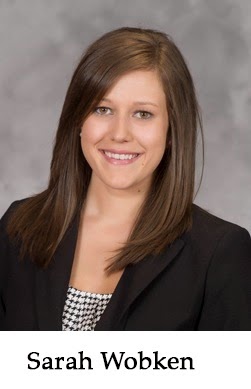
- Sarah Wobken, Staff Editor


[1] AIG Introduces Product Recall Insurance to Cover Risks from Celebrity Endorsements, BusinessWire, (Jan. 29, 2015, 1:00 PM), http://www.businesswire.com/news/home/20150129005844/en/AIG-Introduces-Product-Recall-Insurance-Cover-Risks#.VNPmSlXF9qY
[2] Id.

Wednesday, March 4, 2015

American Needle Settles with the NFL After a Decade of Litigation


         The notorious saga first became famous in 2004 when American Needle, Inc. sued the N.F.L. The suit stems from a 2000 decision by the N.F.L. to enter into an exclusive apparel trademarking and manufacturing contract with Reebok for headgear, thereby ending American Needle’s 20-year tenure as a vendor for the N.F.L. This infuriated American Needle because, in their history, the N.F.L. had always granted nonexclusive contracts to companies like American Needle. They argued that the exclusive contract with Reebok violated the “Sherman Act’s prohibition on any ‘contract, combination or conspiracy in restraint of trade.’”  Essentially, American Needle alleged that the 32 N.F.L. teams conspired together to reach an exclusive deal with Reebok because the teams make up 100% of the market power.

            The case made its way all the way to the Supreme Court in 2010, which held that the N.F.L. was made up of 32 different that are considered 32 independent businesses and therefore are subject to antitrust regulation under Section One of the Sherman Act.  The Court rejected the N.F.L.’s plea that it be granted broad antitrust immunity and ruled that while the teams have certain common interests, they are separate entities interested in profit maximization. The Supreme Court remanded the case and in 2014 a U.S. District Court rejected the N.FL.’s motion for summary judgment, setting the stage for a heated trial. This decision was largely due to the evidence that American Needle submitted showing that the wholesale prices of hats rose significantly shortly after Reebok’s exclusive contract came to fruition.

            Based upon the continued ligation and American Needle’s win, all signs pointed to an antitrust trial. However, most unceremoniously, it was announced recently that American Needle agreed to settle their lawsuit against the N.F.L. The settlement agreement was not disclosed and we may never know the terms, but it is likely that the N.F.L. will be paying a large sum of money to American Needle. While the decision to settle is understandable, many people are disappointed. The case would have set precedent for many antitrust lawsuits involving sports leagues that involve very similar issues; both the National Hockey League and Major League Baseball are under similar antitrust scrutiny. Because there will be no trial, sports leagues are free to continue issuing similar contracts that resemble consorted efforts. Because practices remained largely unchanged since American Needle’s initial win, another trial was desperately needed.    


Sara Montgomery, Staff Editor